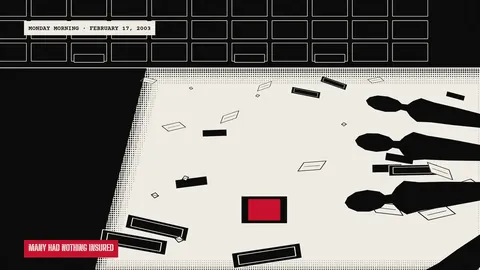
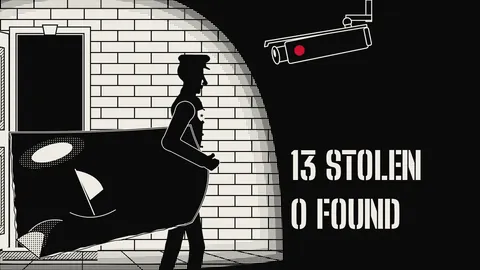
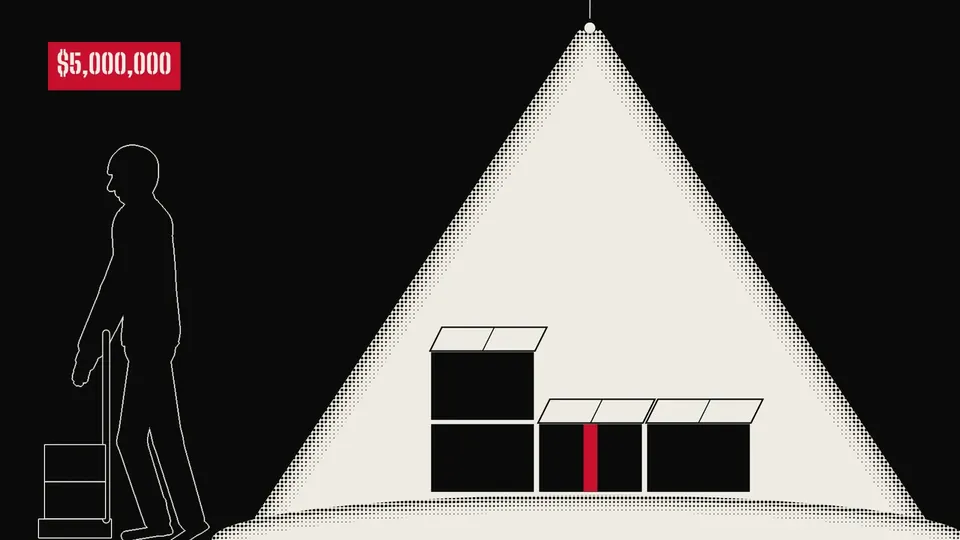
A little after three in the morning on Monday 11 December 1978, the night shift in the Lufthansa cargo building at John F. Kennedy International Airport was on its regular meal break. In a storage room in the same building were forty cardboard boxes holding five million dollars in cash. About an hour later, every one of those boxes was gone.
At the time, the FBI called it the largest cash robbery in history. The jury that tried the case found it was set up from the inside; it was carried out by armed men, most of them in ski masks, and followed by a string of killings and disappearances whose links to the robbery have never been settled. Yet only one man was convicted at trial over it, and he was never accused of being one of the gunmen: Louis Werner, a Lufthansa cargo employee. This account follows the robbery, the investigation and both trials through the court records, the FBI's own file and the press of the time.
What was the Lufthansa heist?
The Lufthansa heist was the armed robbery of Lufthansa's cargo building, Building 261, at Kennedy Airport in Queens, New York, in the early hours of 11 December 1978. Armed men, most of them masked, held the night staff, forced a supervisor to open the high value storage room and drove away with forty boxes of United States currency.
The first reports put the cash at about three million dollars; on the night of 13 December, the FBI said it was more than five million. An FBI memo of 20 December, citing the Chase Manhattan audit, put the total loss at 5.8 million dollars once 800,000 dollars in jewelry and watches was counted.
The getaway van was found within three days, and an FBI informant was naming suspects within a week. Yet no one has been tried and convicted as one of the men who walked into Building 261 that night.
A weekend with five million dollars in Building 261
The money was a shipment of United States currency sent by Commerzbank in Frankfurt to Chase Manhattan Bank in New York, and Lufthansa flew it in. According to an FBI teletype citing German bank records, Commerzbank had obtained the dollars from Da Afghanistan Bank in Kabul.
On Friday 8 December 1978, a Brink's armored truck came to the Lufthansa cargo area to collect the shipment for Chase Manhattan, and it left without the money. According to the appeals court that later reviewed the case, Werner, whose duties included assigning pickup orders, would not clear the shipment without a supervisor or a security officer present, which the court called "admittedly a novel procedure". A Brink's spokesman said the guards waited about an hour and a half.
Accounts of that delay differ. An FBI agent's affidavit and later the prosecutor called Werner "instrumental" in it; in the first days, sources in the Queens district attorney's office had said the Lufthansa supervisor was apparently busy with other consignments; and one later book blamed new security rules and chance.
Whatever the reason, for the whole weekend forty cardboard boxes, each holding 125,000 dollars in used fifty and hundred dollar bills whose serial numbers had never been recorded, sat in the cargo building.
Louis Werner, the man on the inside
Louis Werner was the Lufthansa employee convicted as the inside man. He had worked for the airline at Kennedy since 1968, and his job was to meet the incoming Lufthansa flights and secure the valuable shipments they carried.
Werner also had gambling debts. At his trial the prosecutor put them at 6,600 dollars to one bookmaker alone, and according to the appeals court's account they were paid off shortly after the robbery.
Two years before the heist, a smaller theft had gone through the same cargo area. On 8 October 1976, a sealed Lufthansa bag holding 22,000 dollars in foreign currencies was put back in a container outside the cargo building at 11:05 p.m. and found missing at midnight. Werner admitted walking past the containers at 11:15. A Lufthansa coworker, a friend of his for some eight years, later testified that Werner phoned him shortly after midnight to say he had just stolen the money, and that he hid it for him and was paid 5,000 dollars. The jury convicted Werner of that theft too, and he did not dispute the evidence on it.
According to two men who testified against him, it was after that theft that Werner started talking about a bigger score.
The plan: a coworker, a bookmaker and Martin Krugman
Most of what is known about the planning comes from the men who testified at Werner's trial, so this is their version. The government's case rested largely on that same coworker, who testified under a grant of immunity.
According to the coworker, he and Werner began talking about a big theft in early 1978, and "by August, 1978, we had a plan". They knew, he said, that Lufthansa "always stored $3 million to $5 million in the valuables room". His plan used a gang of six, one large van, the night crew held in place, and the cargo supervisor drawn upstairs by a false story about a telephone call from Germany, at three in the morning, when the few workers on duty would be at lunch. That is almost exactly what happened on 11 December.
What the two men lacked was gunmen: the coworker said he tried to recruit a group of friends, who backed out, and in late November 1978 he dropped the idea.
Werner did not drop it. In November 1978, at a bowling alley, he told his own bookmaker that "if he had the right people he might be able to do something with it". That bookmaker put him in touch with another bookmaker, Martin Krugman, described in 1979 as a beautician and alleged bookmaker in Nassau County, who said he "might be able to accommodate" him.
The sworn testimony stops at Krugman. FBI summaries written in 1979 called him "the connecting link" to "the actual robbers" and said he was "purported to be the middle man" to Jimmy Burke's group; Krugman's toll records, the FBI wrote, showed him speaking with someone at Burke's home on 12 occasions just before he disappeared. According to The New York Times, Burke's name never came up at Werner's trial.
Jimmy Burke and the halfway house in Manhattan
James Burke, known as Jimmy the Gent, was the man investigators came to believe had organized the robbery. In 1979 a police detective called him the "mastermind and leader" of what police called the Robert's Lounge group, after a bar on Lefferts Boulevard in Ozone Park, Queens, next door to a dress factory of Burke's. Burke refused to be questioned.
In the autumn of 1978, after a 1972 loansharking sentence, Burke was in a federal work release program and living in a halfway house in Manhattan, which he had entered on 18 October, The New York Times reported. Another resident was Tommy DeSimone. According to the director, both men signed back in on the night of Sunday 10 December, a few hours before the robbery; the center had one staff member on duty at night, and the director said he did not know whether they had slipped out later. It was, he said, "certainly a possibility". DeSimone was released on parole the day after the robbery.
Burke was never charged with the Lufthansa robbery. In August 1979, one of several people who had agreed to talk in exchange for not being prosecuted told the FBI that "Jimmy Burke definitely planned the robbery", and in 1982 the Bureau called him the "ring leader", but no indictment was returned.
The night of 11 December 1978 at Kennedy Airport
On the evening of Sunday 10 December, a black Ford Econoline van was reported stolen in Flushing, Queens, about eight hours before the robbery. Shortly after three the next morning, the night shift in Building 261 was on its regular meal break in the lunchroom.
That is when the armed men walked in. Most wore ski masks; witnesses saw two of them unmasked, described them as white men with Brooklyn accents, and composite drawings of the two were made. Accounts of their number run from five to seven; the appeals court and the FBI's first report said six. They carried handguns and at least one shotgun.
They rounded up about ten people, Lufthansa workers and a security guard, and handcuffed them. A Port Authority police spokesman said afterwards: "They were so well prepared that they had enough handcuffs for all the employees." A young cargo worker coming back into the building from outside was struck on the head with a pistol and needed stitches. A second employee was overpowered outside, and FBI lab work later noted that two employees had been held for a short time in the van.
The supervisor was handled differently. A telephone call, supposedly from Germany, brought him to the lunchroom, where he was overpowered; the call was a hoax. He was forced to open the high value storage room, and inside were the forty boxes of cash, consigned to Chase Manhattan Bank, along with boxes of jewelry.
The boxes went into the van, and about an hour after they had walked in, the gunmen drove away. Nobody had been killed. A little later that morning, police followed a black van toward Rockaway and let it go when reports from the scene said it was not the robbers' vehicle. A Port Authority police spokesman summed up the night: "It went off like clockwork."
The black van in Canarsie and the first names
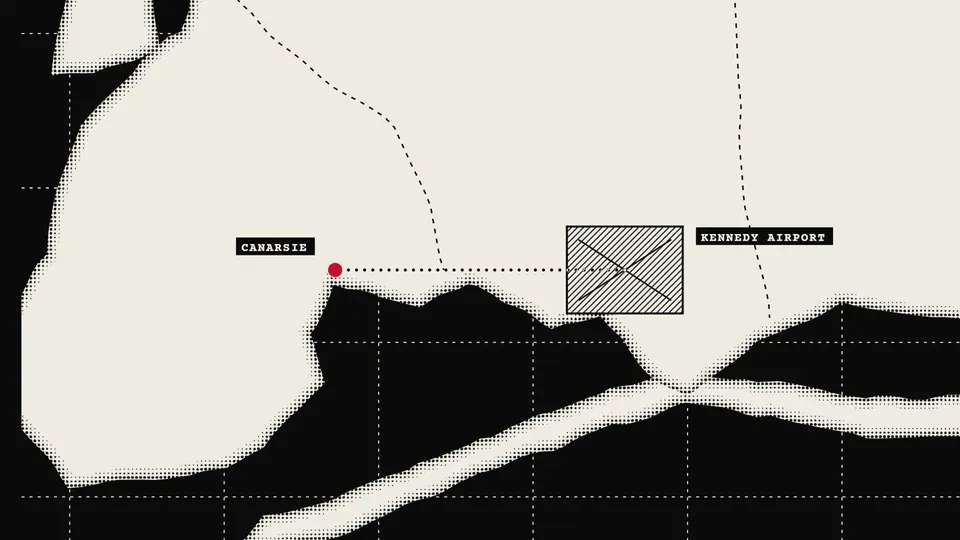
The van could still lead back to the men who used it, and it was not destroyed. On the evening of Wednesday 13 December, a traffic officer in Canarsie, Brooklyn, who had ticketed a black van, recognized its plate in the newspaper, a number an employee had remembered: 508 HWM. It was the van from Kennedy.
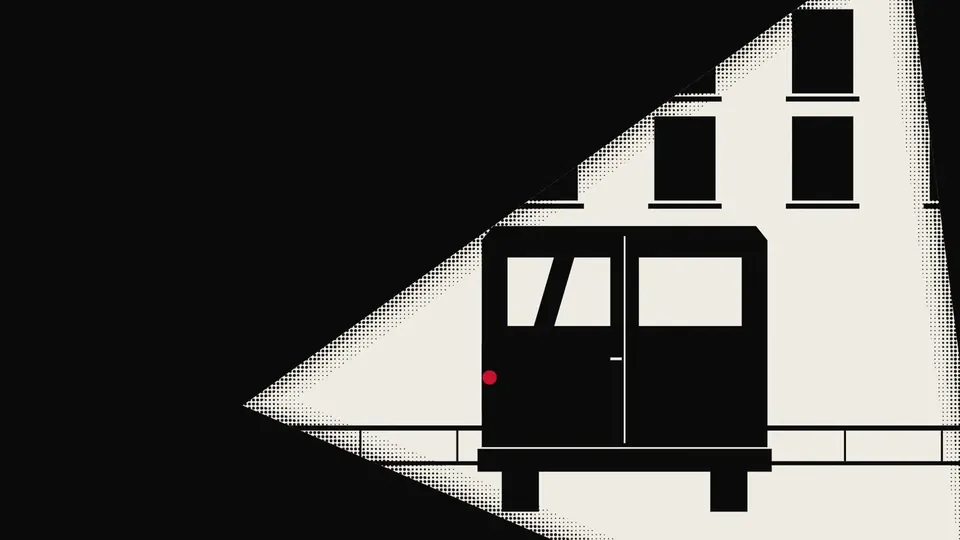
Inside were Lufthansa papers, including a cargo manifest dated 10 December, and the FBI lab found shoe impressions on them that "could only have been made by the armed robbers or by two victim employees". Police also reported fingerprints on the bumper, a door and a mudguard.
Who was supposed to get rid of the van is still disputed. Later accounts, starting in 1979, say a man named Edwards, known as Stacks, was meant to dispose of it, and by 1980 the FBI believed he had stolen it; yet in March 1979 the Bureau wrote that "no concrete information exists connecting Edwards with the Lufthansa robbery".
Names reached the FBI quickly. By 19 December, an informant had named four suspects, all described as associates of Paul Vario, a Lucchese capo, among them Tommy DeSimone and Angelo Sepe. On 18 December, the Justice Department approved a court order to intercept conversations, and about thirty FBI agents were on the case. TIME later reported that Sepe paid 9,000 dollars in cash for a new Thunderbird after the robbery, and that agents bugged the car before he collected it.
The dead and the missing, 1978 to 1979
The first death came a week after the robbery: on 18 December, Edwards, aged 31, was found shot dead in his apartment in Ozone Park, Queens. Nobody was charged with his killing.
On 14 January 1979, Tommy DeSimone was reported missing, and he was never found. The same month, Martin Krugman, the bookmaker at the end of the sworn testimony, vanished too, and he was never found either. With Krugman gone, the sworn trail that led from inside the cargo building toward the men with guns stopped.
On 18 February 1979, Richard Eaton was found dead, bound and gagged, in an abandoned trailer in Brooklyn, his body frozen. Burke's name, address and telephone number were in Eaton's address book, and investigators thought Eaton might have helped launder the money, but the FBI did not consider him a suspect. Burke was later convicted of his murder, which was not tried as a Lufthansa crime.
In mid May 1979, two more men were found shot dead in a parked car in Mill Basin, Brooklyn; police said one of them was a suspect in the robbery and the other "was not connected with the robbery".
The count grew with each retelling. In March 1979, The New York Times reported that officials suspected five murders linked to the robbery; by January 1981 it cited at least nine people murdered or missing; by 1996 some books and newspapers counted fourteen. In June 1979, the FBI wrote that it did not consider four of the dead to be suspects and that the press had sought to use the murders "as a vehicle to enhance public interest". How many of those deaths were truly connected to Lufthansa has never been settled.
Who was convicted for the Lufthansa heist?
Only one person was convicted at trial over the Lufthansa heist: Louis Werner, the Lufthansa cargo employee found guilty in May 1979 of the robbery, of conspiracy and of an earlier theft, and sentenced to fifteen years. No gunman has been convicted, and the two other men charged over the robbery were not convicted of it.
The arrests came in February 1979. On Saturday 17 February, agents picked up Werner's coworker as a material witness, because the FBI believed he was about to flee; he had sought travel to Tokyo, Taipei, Manila and Bogota. The same day, they arrested Angelo Sepe in Richmond Hill, Queens, with Burke at his side, and charged him by complaint. On the night of 20 February, agents arrested Werner as he approached a van in the parking lot of a bowling alley in Lawrence, Long Island; the complaint alleged a 300,000 dollar share, and his bail was set at one million dollars.
Werner went on trial in federal court in Brooklyn in May 1979, before Judge Mark A. Costantino and a jury of ten men and two women. He was not charged as one of the gunmen; the government's case was that he was the inside man. The coworker described the plan, the bookmaker from the bowling alley told the jury about "the right people", and prosecutors said Werner had received about 80,000 dollars before his arrest. Werner's lawyer answered that the witnesses were "trying to take themselves off the hook", that the case rested on "a foundation of mud", and that the coworker had masterminded the robbery himself. Werner did not testify.
On 16 May 1979, the jury found him guilty of the robbery, of conspiracy, and of the 1976 theft. On 29 June, Judge Costantino sentenced him to fifteen years and 25,000 dollars in fines, and in February 1980 the appeals court upheld the conviction. "I only have to say that I am innocent, your honor," Werner told the court at his sentencing, and then he added this.
I saw four men come in here who admitted planning the whole robbery and walk out of here with immunity.
Louis Werner at his sentencing, Brooklyn, 29 June 1979
He meant the government's witnesses. Even the prosecutor, The New York Times reported, had told the jury that the coworker "supplied most of the ideas" for the robbery, and the coworker himself testified that the planning and the recruiting had been left to him. After his conviction, Werner was given immunity to testify before a grand jury, refused, and was jailed for contempt.
Years later, according to one book, Werner told the Parole Commission: "I was not involved in the actual robbery but only gave out the information to the wrong people."
Angelo Sepe, Vincent Asaro and the charges that failed
Two other men were charged over the robbery, and neither was convicted of it. On 23 March 1979, the complaint against Angelo Sepe was dismissed at the government's request; he stayed in prison for violating his parole, and he was never indicted or tried for the robbery.
The New York Times reported in 1983 that after 11 December 1983, under the five year statute of limitations, no one could be prosecuted for the holdup itself, although the prosecutor, Edward McDonald, noted that charges were still possible for allied offenses such as racketeering. On 18 July 1984, Sepe was found shot dead in a basement apartment in Bensonhurst, Brooklyn; McDonald told the Times: "We believe Mr. Sepe was one of the gunmen." Police did not know whether the killing was linked. In September 1989, the FBI closed its file after federal prosecutors in Brooklyn declined to bring charges.
Decades later, in January 2014, federal prosecutors charged Vincent Asaro, whom they described as a Bonanno family captain, with taking part in the robbery as an act of racketeering; their own release stated: "The charges in the indictment are merely allegations." The main witness on Lufthansa was Asaro's cousin, a cooperating witness who had worn a wire and said he had taken part himself. The young cargo worker struck with a pistol in 1978 also testified, and according to the defense he said the cousin was not there. On 12 November 2015, the jury found Asaro not guilty on all counts.
Two years later, sentencing Asaro for an unrelated arson, Judge Allyne Ross found, by the lower standard of proof used at sentencing, that the cousin had "credibly testified that the defendant played a leading role" in the heist; an appeals court ruled in 2019 that she was allowed to weigh the acquitted conduct. The acquittal stands. Asaro died in October 2023.
Henry Hill, Wiseguy and the version everyone knows
Henry Hill, an associate of Burke's, supplied the version of the story most people know today. Arrested on drug charges in 1980, he turned state's evidence, as a court later put it, "after he found out that there was a contract on his life", and became a government witness in exchange for immunity. Hill said that Krugman had brought the Lufthansa opportunity to him, that he took it to Burke, and that he later received 10,000 dollars; according to one book, the prosecutor found that too thin to charge Burke.
Hill's testimony did send Burke to prison for other crimes. In 1981, with Hill as the chief witness, a federal jury in Brooklyn convicted Burke in the Boston College basketball point shaving case, a trial at which the judge limited talk of Lufthansa to "general discussion of a significant robbery"; Burke got twenty years. A Brooklyn jury then convicted him in 1984 of murdering Richard Eaton, a verdict an appeals court said came "largely on the basis of the testimony of Henry Hill", and he was sentenced in February 1985.
Hill's account became Wiseguy, the book by Nicholas Pileggi published in 1985, and then Goodfellas, the film Martin Scorsese released in 1990. In 1991, ruling on the money the book's publisher had paid Hill's agent, the Supreme Court of the United States wrote, citing the book, that Hill "admitted engineering" the theft of six million dollars from Lufthansa.
Yet Hill's version was never tested in a Lufthansa trial. Beyond Krugman, the FBI had its 1979 suspicions and toll records; the detailed story of how the tip reached Burke rests on Hill's word. Hill was never charged with the robbery, and between his cooperation in 1980 and the closing of the FBI file in 1989, no one was charged with it.
Was the Lufthansa money ever found?
Almost none of the Lufthansa money was ever recovered. In October 1983, The New York Times reported that less than 100,000 dollars in loot had been reported recovered, and the rest of the cash, used bills whose serial numbers had never been recorded, has never been found.
The FBI's own file documents no recovery of the Lufthansa loot, and where the money went has never been established. In 1986, a presidential commission reported that law enforcement officials suspected a lawyer with mob connections of helping to launder six million dollars stolen in the robbery, but that was a suspicion, not a finding.
Goodfellas versus the record: myths and facts
Goodfellas follows Henry Hill's memory, so it gets the outline right and many details wrong. Here is how the best known claims compare with the record.
| The claim | What the record shows |
|---|---|
| Six million dollars in cash | The cash was five million dollars. Six million only works with the jewelry valued at a round million, as the appeals court did. |
| America's biggest heist ever | In December 1978, the FBI called it the largest cash robbery in history. A larger cash robbery followed in New York in December 1982, according to later press reports. |
| A couple found dead in a pink Cadillac | No pink Cadillac appears in any period report found by our research. The man Hill's later book links to that character vanished with his wife, and neither was found. |
| A body frozen in a meat truck | It echoes the frozen body of Richard Eaton, found in a trailer in 1979. Hill tied that murder, for which Burke was convicted, to an unpaid cocaine deal, not to the robbery. |
| The worker hit with a pistol was a security guard | He was a young Lufthansa cargo worker coming back from outside. |
| Paulie, the crew's boss, got his share | The FBI wrote in 1980 that the robbery "would not have gone without the authority of Paul Vario". Vario was never charged with it, and the figures given for his share rest on Hill and other unverified accounts. |
Where are they now?
Almost all of the central figures in the Lufthansa case are dead or missing. Jimmy Burke died in 1996 while serving a prison sentence, Paul Vario in 1988, Henry Hill in 2012 and Vincent Asaro, acquitted of the robbery, in 2023. Tommy DeSimone and Martin Krugman have never been found, and Louis Werner's fate is unclear.
Burke died of cancer in a Buffalo hospital, aged 64. Vario died in the federal prison at Fort Worth, where he was serving ten years for extorting payoffs from air freight companies at Kennedy Airport. Hill died in Los Angeles, at 69.
The New York Times reported in 1983 that Werner had recently been released from prison and given a new identity in the federal witness program, while a wire report in 1984 said he was still serving fifteen years. Our research found no record of his death.
Questions about the case
How much would the Lufthansa cash be worth today?
About 25 million dollars. According to the inflation calculator of the U.S. Bureau of Labor Statistics, five million dollars in December 1978 equals about 24.9 million dollars in September 2026. The FBI's 1978 total with the jewelry, 5.8 million dollars, equals about 28.9 million.
What else was stolen besides the cash?
Jewelry from manufacturers in Germany and Italy, declared on the shipping documents at about 850,000 dollars according to a Lufthansa spokesman, and some foreign currency, which the FBI described as a still undetermined amount. The first day's reports mentioned German marks and Spanish pesetas.
How long did the robbery take?
About an hour, according to police. The New York Times put the robbers' departure at 4:15 a.m. The book Wiseguy says the whole robbery took exactly 64 minutes, but that detail comes from Hill's account, not from a court record.
Had there been armed robberies at Kennedy Airport before?
Not in the years just before it. In January 1979, the FBI Director wrote, citing Port Authority figures, that there had been no armed holdups at Kennedy Airport in 1975, 1976 or 1977, and that the Lufthansa robbery was the only one in 1978. Cargo theft was another matter: the same figures counted 193 cargo thefts there in 1977.
Is Goodfellas a true story?
It is based on Wiseguy, Nicholas Pileggi's 1985 book built on Henry Hill's account, and it changes names. In the film, Burke becomes Jimmy Conway, DeSimone becomes Tommy DeVito, Vario becomes Paulie Cicero and Krugman becomes Morrie.
How we researched this
Written by the Red Dot Case Team from the verified research file behind our film: appeals court decisions, the FBI's Lufthansa file, the Asaro court records, period press and books. Every sentence is traced to that file, and claims are attributed. The film's narration uses a synthetic voice.
Sources
- United States v. Werner, 620 F.2d 922, Court of Appeals for the Second Circuit, decided 28 February 1980.
- United States v. Burke, 700 F.2d 70, Court of Appeals for the Second Circuit, decided 28 January 1983.
- People v. Burke, 72 N.Y.2d 833, New York Court of Appeals, 9 June 1988; and People v. Burke, 128 A.D.2d 542, Appellate Division, 2 March 1987.
- Simon and Schuster v. Members of the New York State Crime Victims Board, 502 U.S. 105, Supreme Court of the United States, 10 December 1991.
- FBI Records: The Vault, Lufthansa Heist, Parts 01, 02 and 03, case file LUFROB, 1978 to 1989.
- U.S. Attorney's Office, Eastern District of New York, press release on the indictment of Vincent Asaro, 23 January 2014.
- United States v. Vincent Asaro, 17 CR 127, sentencing transcript of 28 December 2017, and Opinion and Order of 17 April 2020, Eastern District of New York.
- The New York Times: "7 Masked Thugs Get More Than $3 Million in Holdup at Kennedy", 12 December 1978; "Airport Cash Loot Was $5 Million; Bandits' Van Is Found in Canarsie", 14 December 1978; "Identity of Four Known Quickly in Airline Theft", 23 February 1979; "5 Murders Suspected as Possible Aftermath of Lufthansa Holdup", 25 March 1979; "Cases Are Laid Out in Lufthansa Trial", 6 May 1979; "Lufthansa Robbery Suspect Is Slain", 19 July 1984; "Vincent Asaro, Accused in Lufthansa Heist, Is Found Not Guilty", 13 November 2015.
- TIME, "Cracking the Lufthansa Caper", 5 March 1979.
- President's Commission on Organized Crime, The Impact: Organized Crime Today, April 1986.
- Nicholas Pileggi, Wiseguy: Life in a Mafia Family, 1985. Ernest Volkman and John Cummings, The Heist, 1986. Anthony M. DeStefano, The Big Heist, 2017.