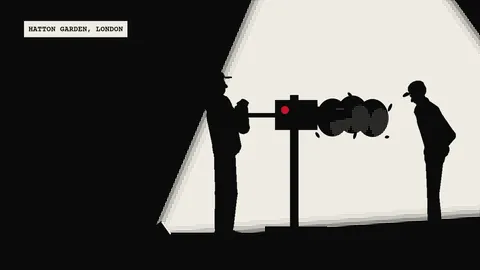
Shortly after one in the morning on Sunday 18 March 1990, the night after St. Patrick's Day, two men dressed as Boston police officers rang the intercom at the staff entrance of the Isabella Stewart Gardner Museum in Boston. They told the guard on duty they were answering a call about a disturbance. Museum policy did not allow him to let them in. He did, and he later said he had not known that the rule covered police officers.
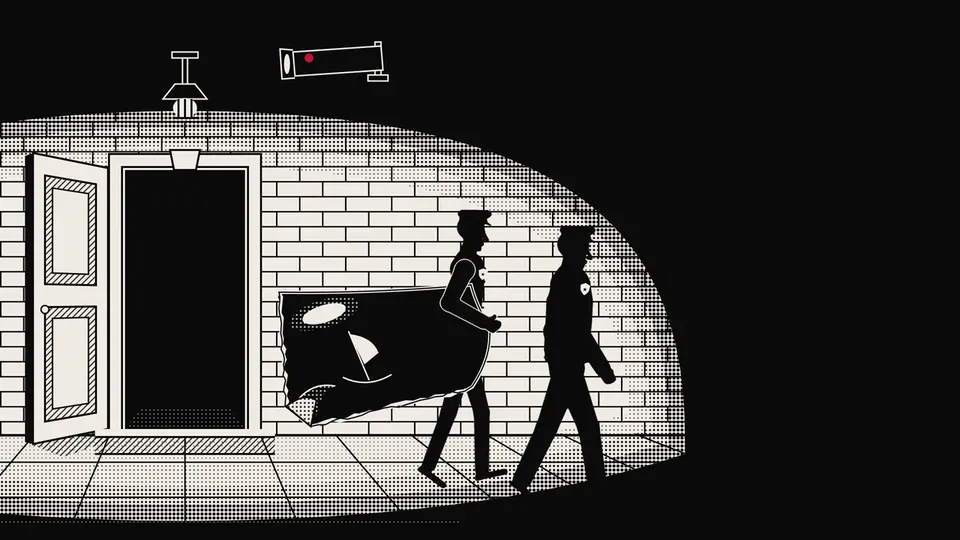
When the two men walked out again, at 2:45 a.m. according to the museum, they had thirteen works of art with them, among them Rembrandt's only known seascape and one of only about three dozen known paintings by Vermeer. Nobody had seen a gun. No alarm had reached the police. The two night guards were handcuffed in the basement, and they stayed there until police arrived in the morning.
More than 36 years later, no one has ever been charged with the theft, and not one of the thirteen works has been recovered. The FBI calls it one of the largest property crimes in U.S. history. In 2013 the Bureau said it knew who the thieves were, yet it has never officially named them. The museum, whose founder's will forbids changes to her galleries, still shows the empty frames. This is the record of that night as the museum's own sensors logged it, of the thirteen works, of the men investigators looked at, of why the case was never solved and of where it stands in 2026.
What happened at the Gardner Museum in 1990?
In the early hours of 18 March 1990, two men posing as Boston police officers were let into the Isabella Stewart Gardner Museum, handcuffed the two night guards and stole thirteen works of art, including paintings by Rembrandt, Vermeer and Manet. No one has ever been charged, and nothing has been recovered.
The estimated value has grown with time. Early estimates in 1990 put the loss at about 200 million dollars, a figure TIME's art critic called "ridiculously exaggerated" that April. In 2015 the FBI and federal prosecutors put the works at "at least $500 million, though they are considered priceless". No source explains how that figure was reached. A federal appeals court called the theft, in 2007, one of the largest art thefts in history.
Isabella Stewart Gardner and her will at Fenway Court
The museum the two men entered held the collection of one woman, kept under the terms of her will. In 1990 it held about 290 paintings and some 2,000 other objects, according to wire reports at the time.
She chose the stolen works herself, over three decades. On 5 December 1892, at the Hôtel Drouot in Paris, she bought Vermeer's The Concert, lot 31, signaling her agent with a handkerchief; the winning bid was 29,000 francs. She later said she was told that the Louvre and the National Gallery had wanted it too. In September 1898, through the art expert Bernard Berenson, she bought the two Rembrandt canvases that would be cut from their frames in 1990. A landscape she bought in March 1900 as a Rembrandt is now attributed to his pupil Govaert Flinck. The Chinese bronze vessel came in 1922.
She died in the evening of 17 July 1924, and her will named Morris Carter the first director. The will, dated 9 May 1921, left the building and the collection in trust "as a Museum for the education and enjoyment of the public forever". It forbids exhibiting any work she did not own, or had not contracted for, at her death. Its seventh article goes further: if the trustees add works or change the general arrangement of the first three floors, everything passes to the President and Fellows of Harvard College in trust to sell, in Paris, and the museum is dissolved. After the theft, the staff hung the empty frames back in their places.
Shortly after 1 a.m.: two men at the Palace Road door
Saturday 17 March 1990 was St. Patrick's Day, and Boston was still celebrating that night, according to the WBUR and Boston Globe podcast Last Seen. Two guards were on duty. The one at the security desk was a 23 year old musician working as a night watchman, who said he had recently dropped out of Berklee College of Music. The second guard was working one of his first night shifts, according to two books on the case.
Shortly before the theft, a group of young people saw a car parked near the museum with two men dressed like police officers inside, investigators later said. Then the two men rang at the employee entrance, a side door on Palace Road. The exact minute is disputed: accounts give 1:15, 1:20 and 1:24, the time most often reported from the museum's security records. The U.S. Attorney's Office later described them as "two white males"; the guards put one in his late twenties or early thirties and the other in his thirties, according to an FBI presentation.
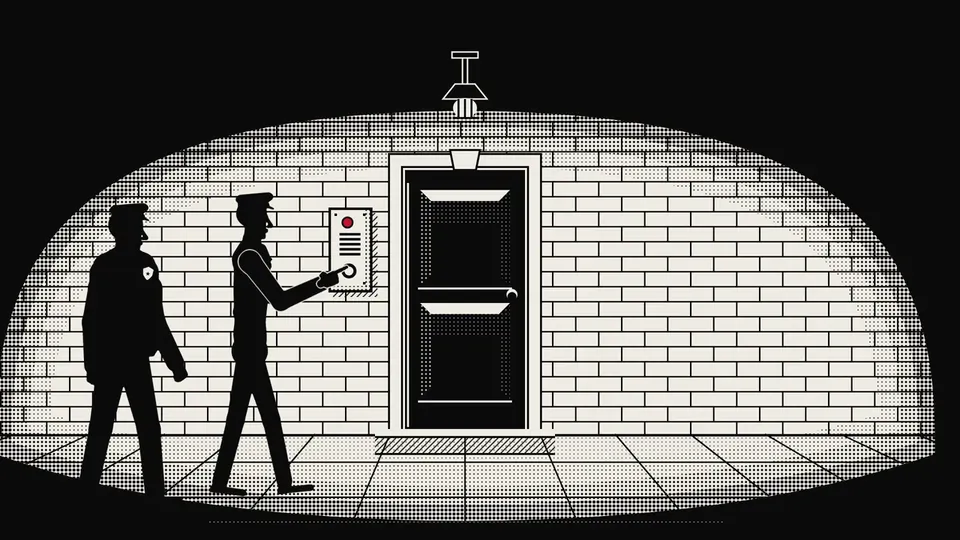
Once inside, the men told the guard to step away from the security desk. By his account, they said he looked familiar, spoke of a warrant and asked him to come out from behind the desk with identification. That step took him away from the panic button, the only alarm that could have alerted the police, the Boston Globe later reported. At the men's request, he called the second guard to the desk. One of them then told the two guards, as the guard on duty remembered it, "Gentlemen, this is a robbery."
Both guards were handcuffed and led to the basement, where the men left them in separate areas. Their eyes and heads were wrapped in duct tape. The guard on duty was handcuffed to an electrical box, and the second guard to a pipe near a basement sink, according to a 2018 podcast built on his interview. The guards later recalled being told that the men knew where they lived, and that in about a year they would get a reward.
Inside the Dutch Room, the Short Gallery and the Blue Room
Motion detectors recorded the men's movements through the galleries, and their first footsteps upstairs registered in the Dutch Room on the second floor, according to that record as later reported in books.
There they cut Rembrandt's Christ in the Storm on the Sea of Galilee and A Lady and Gentleman in Black from their frames. A Reuters photograph of 21 March 1990 shows the empty frame of the double portrait lying on the floor. A strip of The Storm's painted edge stayed attached to its stretcher, the museum's security director said in a 2018 podcast. They took Vermeer's The Concert and Flinck's Landscape with an Obelisk out of their frames; the two paintings stood back to back on a table by the window. From a table they took an ancient Chinese bronze gu, a wine vessel.
From the side of a cabinet they took a small self portrait etching by Rembrandt, about the size of a postage stamp, and removed it from its frame. They also took a large Rembrandt self portrait, painted on an oak panel, off the wall, then left it behind, leaning against a cabinet. Nobody knows why.
In the Short Gallery, one of the men began unscrewing the glass case of a silk Napoleonic flag, gave up and took only the bronze eagle finial from the top of its staff. Five works on paper by Degas were taken from the same gallery, torn from two frames in a case, according to later accounts. Downstairs, in the Blue Room on the first floor, the thieves took Manet's Chez Tortoni and left its frame behind. That empty frame was later found on the chair in the security director's office.
Before leaving, they took the videocassettes from the surveillance recorders. They also took the motion detector printout, but the data survived on the computer's hard drive, according to later accounts. The museum says they carried the works out in two trips to their car.
- Two men in police uniforms ring at the staff entrance.
- The time most often reported for the guard letting them in.
- Both guards are bound in the basement, by one reporter's reconstruction.
- First footsteps recorded upstairs, in the Dutch Room.
- One of the men reaches the Short Gallery.
- A door opens for the first of two trips to the car.
- The two men leave for good, according to the museum.
- Police arrive; the guards are still handcuffed, according to the museum.
Times from the museum's door and motion records, as later reported in books and the press. The records run from 1:24 to 2:45; one reporter who says he saw them counts 88 minutes.
The museum's security director has estimated that only about 34 minutes of that time went into taking the objects.
What was stolen from the Isabella Stewart Gardner Museum?
Thirteen works of art: three works by Rembrandt as the museum lists them, two paintings and a tiny etching, Vermeer's The Concert, Manet's Chez Tortoni, a landscape by Govaert Flinck, five works on paper by Degas, a Chinese bronze vessel more than 3,000 years old and a gilded bronze eagle finial. The museum's list gives these titles:
- Rembrandt, Christ in the Storm on the Sea of Galilee
- Rembrandt, A Lady and Gentleman in Black
- Rembrandt, Portrait of the Artist as a Young Man, an etching
- Johannes Vermeer, The Concert
- Govaert Flinck, Landscape with an Obelisk
- Édouard Manet, Chez Tortoni
- Edgar Degas, Leaving the Paddock
- Edgar Degas, Procession on a Road near Florence
- Edgar Degas, Three Mounted Jockeys
- Edgar Degas, Study for the Programme, charcoal on white paper
- Edgar Degas, Study for the Programme, charcoal on buff paper
- Chinese, Shang dynasty, Gu, a bronze beaker
- Attributed by the museum to Antoine Denis Chaudet, Eagle Finial
The Storm, dated 1633, is Rembrandt's only known seascape, and the museum's catalogue identifies the man in the boat holding his cap and looking out as Rembrandt himself. The Concert shows three people making music; behind them hangs Dirck van Baburen's The Procuress. Chez Tortoni is a small canvas that hung beneath Manet's portrait of his mother. The gu, a ritual wine vessel of about 1200 to 1100 BC, was the oldest object taken. The museum suggests the eagle may have looked like gold to the thieves. Not every piece was of the same rank: one reporter values the five Degas sheets together at under 100,000 dollars.
The first count was wrong. Wire reports in the first days spoke of eleven or twelve works, and the eagle was announced missing only on the afternoon of Tuesday 20 March, according to one account of that week.
Morning in Boston and the first leads
Early wire reports said staff found the guards around 7 or 8 a.m.; the museum says police arrived at 8:15, five and a half hours after the thieves had left. Neither man was seriously injured, UPI reported.
The FBI and Interpol were on the case from the first day. An FBI spokesman described the theft as the careful work of professional thieves. Decades later, the agent who had led the case for 22 years saw it differently: "It didn't require a master thief to go in there."
On Tuesday 20 March, the museum announced a one million dollar reward, guaranteed by the auction houses Sotheby's and Christie's. Its director said the money could go to anyone who brought the works back, even the thieves. Investigators also looked at two earlier incidents reported by the Associated Press that week. On 15 January 1990, two men in police uniforms had asked to be let into the closed Museum of Fine Arts, Boston, and about two weeks before the theft a man had begged the Gardner's night watchman to let him in, and been refused.
Who stole the Gardner Museum paintings?
Nobody knows for certain, and no one has ever been charged. The thieves were two men in police uniforms. In 2013 the FBI said it had identified them, without naming them, and in 2015 an FBI official said they were dead. The Bureau has never officially named them, and no court has tested any theory of the case.
A collector who ordered the theft?
The first theory appeared on Monday 19 March 1990, the day after the theft, when art market experts quoted by the Boston Globe and UPI suggested the works had been stolen to order for a private collector. The same week, a security consultant and TIME's art critic doubted it. In 1991 the Dutch police art theft registry said it had never been proven. No evidence of such a buyer has ever been made public, and it is not the theory the FBI later presented.
What the FBI said in 2013 and 2015
On Monday 18 March 2013, the 23rd anniversary, the FBI's Boston office said for the first time where it believed the art had gone.
The FBI believes with a high degree of confidence in the years after the theft the art was transported to Connecticut and the Philadelphia region and some of the art was taken to Philadelphia where it was offered for sale by those responsible for the theft.
Special Agent in Charge, FBI Boston, in a release of the U.S. Attorney's Office, 18 March 2013
With the same confidence, the Bureau said, it had identified the thieves as members of a criminal organization based in the Mid Atlantic states and New England, but it gave no names. It added that after the attempted sale in Philadelphia, about a decade earlier, its knowledge of the art's whereabouts was limited, and that it did not know where the works were. The U.S. Attorney said her office would "consider the possibility of immunity from criminal prosecution for information that leads to the return of the paintings".
In March 2015 the FBI and the museum took a slide presentation to libraries, colleges and museums, setting out their theory that local criminals with mob ties were behind the theft. That August, an assistant special agent in charge of the FBI's Boston office told the Associated Press that the thieves "are deceased", and declined to identify them. The Bureau has published no evidence for either claim.
Carmello Merlino and the talks of 1998
Court records from an unrelated case show where the FBI was looking in the late 1990s. By then Carmello Merlino, a Boston area career criminal, had become a "person of interest to the FBI" in the Gardner theft, a federal court later wrote. Between January and late April 1998, an FBI agent met him three times to negotiate the return of the paintings, and the talks ended with the agent frustrated that Merlino could not return them. The court described Merlino as "obsessed with the $5 million reward", and said he let it be known that he had access, if not to the paintings, at least to people who did.
On 7 February 1999 the FBI arrested Merlino and others in a sting over a planned robbery of a Loomis Fargo armored car facility in Easton, Massachusetts; the plot's inside man had been invented by an informant working with the FBI. In the fall of 2001 he was convicted of Hobbs Act conspiracy and firearms offenses in that case, not of anything connected to the Gardner theft. He was never charged with the theft. He was dead by January 2012, according to the court, and the Boston Globe reports that he died in prison in 2005.
Robert Gentile, the Connecticut mobster who denied it
Around 2010, the widow of a Boston area criminal told the FBI that her husband had passed two of the paintings to Robert Gentile, a Connecticut mobster. On 28 March 2012, in federal court in Hartford, a prosecutor said there was "reason to believe Mr. Gentile had some involvement with stolen property"; his lawyer said he had no information about the theft. Prosecutors said agents searching his home in Manchester, Connecticut, that year found a list of the stolen works with black market prices inside a March 1990 Boston Herald, along with police hats, weapons and other items. Gentile said he had the list for a plan to swindle a buyer. Prosecutors said an FBI polygraph indicated he was lying; his defense said it was improperly administered.
Prosecutors also said that in 2015 he suggested to an undercover FBI agent that he had two of the paintings, and he was arrested on gun charges. His lawyer said the recordings showed Gentile protesting that he did not know where the art was; the U.S. Attorney called that "selective reporting". On 27 February 2018 a federal judge sentenced him, then 81, to 54 months for gun crimes, not for anything related to the theft. "I had nothing to do with the paintings. It's a big joke," he said in 2019. The FBI considered him the last person known to have had items from the theft, his lawyer said. He was never charged with the theft, and he died after a stroke at Hartford Hospital on 17 September 2021, aged 85, still denying it.
The stranger let in 24 hours earlier
On 6 August 2015, federal prosecutors and the FBI released museum camera footage from 12:49 a.m. on 17 March 1990, almost exactly 24 hours before the theft. It shows a car pulling up by a rear entrance and an unidentified man being let in by a security guard, against museum policy, through the same door the thieves later used. The release did not say which guard opened the door, and the man has never been identified. Prosecutors said the car matches the general description of a vehicle reported parked outside the museum moments before the theft. The thieves had taken the tapes of the night of the robbery but not those of the night before, and the images are low resolution.
Why was the Gardner heist never solved?
No one has returned the works or produced evidence that a court could test. An FBI official said in 2015 that the thieves were dead, the two men later named as persons of interest died without being charged with the theft, and federal prosecutors were quoted in 2013 as saying the theft itself could no longer be prosecuted.
The general federal time limit is five years, and a specific offense for the theft of major artwork, with a 20 year limit, was created only on 13 September 1994, after the theft. According to the Boston Globe, the U.S. Attorney said in 2013 that the limit had run out for the people who actually robbed the museum, while hiding or moving the art could still be charged.
The thieves left with the night's surveillance tapes, and almost everything known about their movements inside comes from two origins: the two guards' accounts and the museum's motion detector record. The minute by minute times first appeared in print in TIME in November 1997, more than seven years after the theft.
In 1997, TIME profiled people who said they could broker a return in exchange for immunity and the reward, and nothing came back. "The impossible thing about the case is that there were so many possibilities," an FBI agent told the magazine. In the Loomis Fargo case, a federal court found that one informant's claims about the Gardner art appeared to be "a scam motivated by the reward". In 2007 a federal appeals court noted that despite the reward, "the thieves have not been apprehended nor have the paintings been recovered".
Empty frames and a ten million dollar reward: the case in 2026
In 1997 the museum raised its reward from one million to five million dollars, which it calls the largest private reward in the world at that time. On 23 May 2017 the board doubled it to ten million dollars, with a deadline of midnight on 31 December 2017, and in January 2018 it extended the offer.
The security director said in 2017 that paying the thieves themselves "would be a ransom", a shift from the offer of 1990.
In the Dutch Room, the empty frames were still reported on the walls from 2013 to 2024. In 2013 the U.S. Attorney said that each time she entered the room and saw them, she was reminded of "the enormous impact of this theft". The room has been under restoration since 2024, and in March 2025 the restored empty frame of The Storm was put back where the painting had hung, a Boston television station reported.

The museum's security director put the waiting this way in 2018: "Typically, stolen masterpieces are either recovered soon after a theft or a generation later." The retired lead agent said in March 2025: "Someone is going to be looking in an attic and find these pieces." That same month, the head of the FBI's Boston office renewed the appeal to the public.
In March 2026, the agent who led the case for 22 years published his own theory in a book, Thirteen Perfect Fugitives. It has never been tested in court. On the 36th anniversary, 18 March 2026, FBI Boston said it was still looking for leads.
Myths and facts about the Gardner heist
| Claim | What the record shows |
|---|---|
| It was a St. Patrick's Day heist | The theft took place in the early hours of Sunday 18 March, the night after St. Patrick's Day. |
| The guards were duct taped to chairs | A 2013 wire report said so. Both guards described being handcuffed, one to an electrical box and one to a pipe. |
| Three Rembrandt paintings were stolen | Two paintings and one etching. A Dutch paper reported in 1990 that his famous painted self portrait of 1629 was taken; the large self portrait was in fact left behind. |
| The eagle was gold | The museum describes it as gilt bronze. |
| The will requires empty frames | The will forbids additions and changes to the arrangement. It does not mention frames. |
| Renoir sketches were taken | A 2013 news report said so. The sketches are by Degas. |
| In 2013 the FBI said the thieves were dead | In 2013 it said they had been identified. The claim that they were dead came from an FBI official in 2015; press reports from 2017 onward merged the two. |
36 years after two men in police uniforms rang at a side door on Palace Road, the museum keeps its reward open and its frames empty. The two men have never been officially named, and not one of the thirteen works has come back. For another case file from the same era, read the story of the Lufthansa heist at Kennedy Airport in 1978, where almost none of the cash was ever recovered.
Questions about the case
What are the conditions of the Gardner Museum reward?
The museum pays for information that leads directly to the recovery of all the items in good condition. A partial recovery earns a share based on the market value of what comes back, confidentiality is guaranteed, and a separate reward of 100,000 dollars is offered for the eagle finial alone.
Who should I contact with information about the stolen works?
The museum asks anyone with information to contact its security director, and says confidentiality is assured.
Why was the Gardner Museum not insured against theft?
In March 1990 the museum said its collection was insured only for restoration costs, not theft. Its spokesman gave the will as the reason: since the museum cannot buy replacement works, a payout would be money thrown away. One reporter adds that coverage was simply too expensive for its budget of about 1.5 million dollars a year in the 1980s.
How big are the stolen works?
They range widely. The Storm measures about 1.6 by 1.3 meters and The Concert about 72.5 by 64.7 centimeters. Chez Tortoni is only 26 by 34 centimeters, the Rembrandt etching about 4.5 by 5 centimeters, and the eagle about 25 centimeters high.
Has any of the stolen art been seen since 1990?
No sighting has ever been confirmed in public. In 2014 the FBI's lead agent spoke of "confirmed sightings" without saying the FBI had seen the art. In 2025, after retiring, he said there had been credible sightings of the Vermeer, The Storm, the etching, the Manet and the eagle, and none of the other works.
How we researched this
This article is built from the verified research file of our film: museum and Justice Department releases, federal court opinions, wire reports from March 1990, later press and books. We checked each sentence against that file before publishing. The text was drafted with the help of AI, and the narration of our film is a synthetic voice.
Sources
- Isabella Stewart Gardner Museum, "Theft: Active and Ongoing Investigation" and "The 13 Stolen Works" (consulted 3 November 2026)
- Isabella Stewart Gardner Museum, press release on the extension of the $10 million reward, January 2018
- U.S. Attorney's Office, District of Massachusetts, "FBI Provides New Information Regarding the 1990 Isabella Stewart Gardner Museum Art Heist", 18 March 2013
- U.S. Attorney's Office, District of Massachusetts, "Historic Footage Connected to Gardner Museum Burglary Released", 6 August 2015
- U.S. District Court, District of Massachusetts, Crim. No. 99 10098, memorandum and order of 11 June 2015
- U.S. District Court, District of Massachusetts, Crim. No. 99 10098, memorandum and order of 9 January 2012
- U.S. Court of Appeals for the First Circuit, 501 F.3d 59, decided 31 August 2007
- United States Code, Title 18, sections 668, 3282 and 3294
- De Volkskrant, 21 March 1990 (Reuter and AP), on the museum's insurance statement
- "A Boston Theft Reflects the Art World's Turmoil", TIME, 2 April 1990
- "The Great Art Caper", TIME, 17 November 1997
- Harvard Magazine, the stolen works with captions provided by the museum, 13 February 2012
- Associated Press via WGBH, "FBI Says Suspects In Gardner Heist Are Dead", 7 August 2015
- Associated Press via WBUR, "Gardner Museum Doubles Reward For Stolen Artwork To $10M", 23 May 2017
- Associated Press via WBUR, on the sentencing of Robert Gentile, 27 February 2018
- Boston Globe, on the death of Robert Gentile, 22 September 2021
- Boston Globe, the retired lead agent on the case, 18 March 2025
- Boston 25 News, on the restoration of the Dutch Room, 11 March 2025
- Boston Globe, on the retired lead agent's book, 17 March 2026
- NBC 10 WJAR, "FBI continues Gardner Museum heist investigation after 36 years", 18 March 2026
- Morris Carter, Isabella Stewart Gardner and Fenway Court, 1925; and the museum's annual report for 1925, with the abstract of the will
- Isabella Stewart Gardner Museum, European and American Paintings in the Isabella Stewart Gardner Museum (catalogue), 1974
- The Gardner Heist, 2009, and Master Thieves, 2015, two books on the case drawing on police reports and museum files