On the morning of Monday 17 February 2003, the diamond dealers of Antwerp came back to work after the weekend. Two floors beneath the Diamond Center, in the city's diamond district, the vault they used stood open, and more than a hundred of its safe deposit boxes had been broken into. The floor was strewn with diamonds, gold, jewellery, cash and emptied boxes that the thieves had left behind. People shouted "That's my box!", an investigator working for the insurers later recalled; some cried, and some fainted. Yet no alarm had sounded, the guards had seen nothing, and the vault door, a foot of steel, had not been forced. How had anyone opened it? More than twenty years later, nobody has publicly answered that.
Police put the haul at around $100 million, and the press called it the heist of the century. Within days, a pile of rubbish dumped in woods beside a motorway gave investigators a name: Leonardo Notarbartolo, an Italian tenant of the building with a criminal record. In 2005 he and three other men were convicted; a fifth participant was never identified, and most of the loot was never recovered. Then, in 2009, Notarbartolo told Wired a very different story, one that a lead detective says cannot be confirmed in a single detail. This account sets the court outcome, the investigators' findings and Notarbartolo's shifting versions side by side, and says where the record runs out.
What was the Antwerp diamond heist?
The Antwerp diamond heist was the theft, over the night of 15 to 16 February 2003, of diamonds, gold, jewellery and cash from more than a hundred safe deposit boxes in the vault of the Diamond Center in Antwerp, Belgium. No alarm sounded, the vault door was not forced, and nobody was hurt.
That figure was only ever an estimate. Detective Agim De Bruycker later explained his reasoning to Wired: about $25 million in legitimate claims and, since three quarters of the trade ran "under the table", at least $75 million more. When the court ruled in 2005, the haul was reported as €100 million. Later estimates climbed as high as half a billion dollars, while the man convicted of leading the gang has put it near $20 million.
The Diamond Center at Schupstraat 9 to 11
Most of the world's diamonds pass through Antwerp: more than half, the Associated Press reported in 2003; about 80 per cent, said the BBC. Its diamond district was guarded by a police post, steel bollards at both ends and many cameras. The Diamond Center stood inside it, and its vault lay two floors underground.
To reach the vault, visitors passed cameras and bars, then a steel door a foot thick. That door had a key and a combination dial which, according to Wired, offered 100 million combinations. Inside, sensors watched for heat or motion and for light, and a magnetic alarm on the door would go off if the field between its two plates broke.
At weekends the security was thinner. The guards were reduced to a single person, the magistrate Leen Nuyts told the Associated Press, and according to Scott Andrew Selby, one of the authors of the book Flawless, nobody watched the camera images over the weekend. According to Flawless, the date was chosen partly because a women's tennis tournament in the city that weekend, the Diamond Games, and a diamond industry wedding would keep people away.
Leonardo Notarbartolo, the tenant from Turin
Leonardo Notarbartolo was born in Palermo and lived near Turin; he was 51 in March 2003. In November 2000, according to the prosecutor's office, he rented an office in the Diamond Center in the name of a phantom company, presenting himself as an Italian jeweller from Turin; it did not matter, the Associated Press noted, that he had a criminal record in Italy. As a tenant he also rented a safe deposit box in the vault, which let him visit it.
What he did with the office is disputed. By his own account to Wired, he bought small stones, paid cash and met dealers; detective Patrick Peys says the office held only a chair and a desk, and that he never bought or sold a single diamond in all his time in Antwerp. His own box was one of the few left untouched, which drew suspicion.
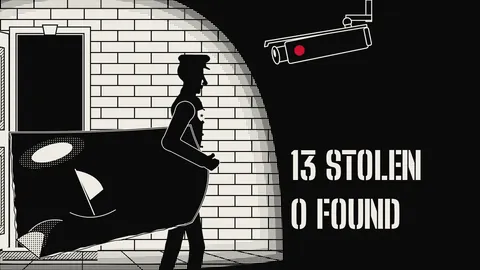
Investigators alleged in 2003 that he visited the vault several times in the week before the theft, apparently to make sure the cameras could be disabled, and that his last visit was on the Friday, within the hour before closing. Peys has said that tapes from before the heist showed him on a "last reconnaissance" with a black bag under his arm, and that the bag, found later in his flat, held a video camera. The prosecutor's office also said in 2003 that his comings and goings let him study the security, obtain copies of keys and passes, find a way to disable the alarm and learn the combination of the main door.
The weekend of 15 to 16 February 2003
The vault was entered on the night of Saturday 15 to Sunday 16 February. The security cameras had been covered, with tape or black plastic bags depending on the account, and the recordings had been taken away. Hairspray had blinded the vault's heat and motion sensor, black electrical tape covered the light sensor, and a sheet of polystyrene held out on a broom handle blocked another detector. The magnetic alarm on the door was beaten too: its two plates were unscrewed and moved together, held with tape, so the field between them never broke.
The boxes themselves were forced with a homemade tool. More than a hundred were opened: 123 out of 160 by the count given out in 2003, 109 out of 189 by the count in Wired and Flawless. Peys has said the thieves even left their own tools behind, which told him the haul had to be enormous.

How did they get into the vault?
Nobody has publicly established how. Investigators know the sensors were blinded and the door alarm beaten, but how the thieves entered the building, and how they got past the combination dial and the key of the vault door, has never been explained in any published finding.
Wired itself wrote that the police never determined how the men got in, and Peys has said the police may never know. TIME, reporting on the 2025 Netflix documentary, wrote that authorities believe the thieves came in through the garage. Notarbartolo describes something else: a run down office building on Pelikaanstraat, its back garden, a ladder to a second floor terrace and a window.
The combination is the deeper mystery. Notarbartolo says a camera the size of a fingertip, hidden above the vault door, filmed a guard dialling the combination in September 2002 and fed a receiver hidden in a fire extinguisher. Selby doubts it: the digits, he says, can only be read through a lens on top of the dial, and the man who built the vault was convinced they could not be observed. "For me, the biggest mystery is, how did they get past that combination lock?" he told TIME.
The key is disputed as well. In 2003 the police said the thieves had "somehow obtained copies of the master keys"; Notarbartolo says the original key was hanging in a utility room next to the vault. He also says the crew worked in the dark. According to Flawless, the lights were blazing when a security guard found the scene, and his accomplices contradict him. No published court ruling settles any of these versions.
Monday 17 February: the Diamond Squad in the vault
Detectives of the Antwerp Diamond Squad were called to the building that Monday morning. As the detectives later told it, one of them phoned the alarm company from the open vault and was told everything was fine. Peys put it simply a year later: "It's unimaginable that something like that happens because the buildings are secured quite well."
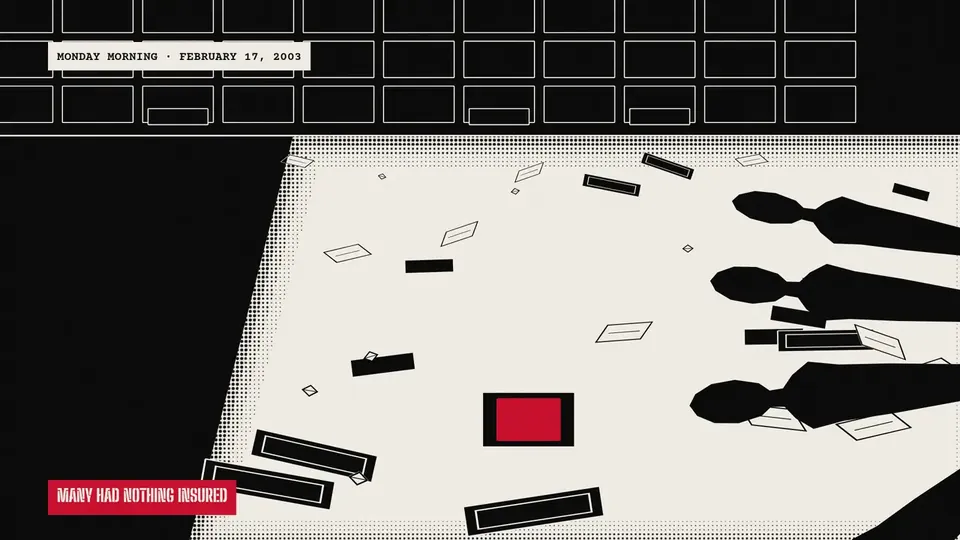
There were about 150 victims, according to the Belgian broadcaster RTBF. Many of the box holders had no insurance. "Real people with small businesses were wiped out," Selby told TIME.
A piece of genius in its simplicity.
Eric Sack, Antwerp's director of judicial services, March 2003
The Belgian daily La Dernière Heure had a shorter verdict: "So much ingenuity spoilt by so much carelessness."
The rubbish in the woods near Vilvoorde
That same Monday, a man who owned a strip of woods beside the E19 motorway, north of Brussels near Vilvoorde, and who often complained to the police about dumped rubbish, phoned them about yet another pile. This time it held papers from the Diamond Center, and the police came straight away.
Among the rubbish were videotapes, a half eaten salami sandwich, a bottle of wine, a scatter of small gems and pieces of banknotes. Reports at the time said it also held security passes, copied pass keys and burglary equipment. One document carried the name of Leonardo Notarbartolo; Wired describes it as a torn invoice for a low light video surveillance system he had bought. A paper named an alarm specialist, Elio D'Onorio. Questioned in Italy, D'Onorio admitted installing security cameras in Notarbartolo's office but denied any involvement in the crime, according to Wired.
Investigators matched a supermarket receipt to the salami and then to the shop's security camera, which led them to Ferdinando Finotto. Peys and the authors of Flawless say the police already knew him from another robbery inquiry. Investigators say they traced the others through phone records and SIM cards.
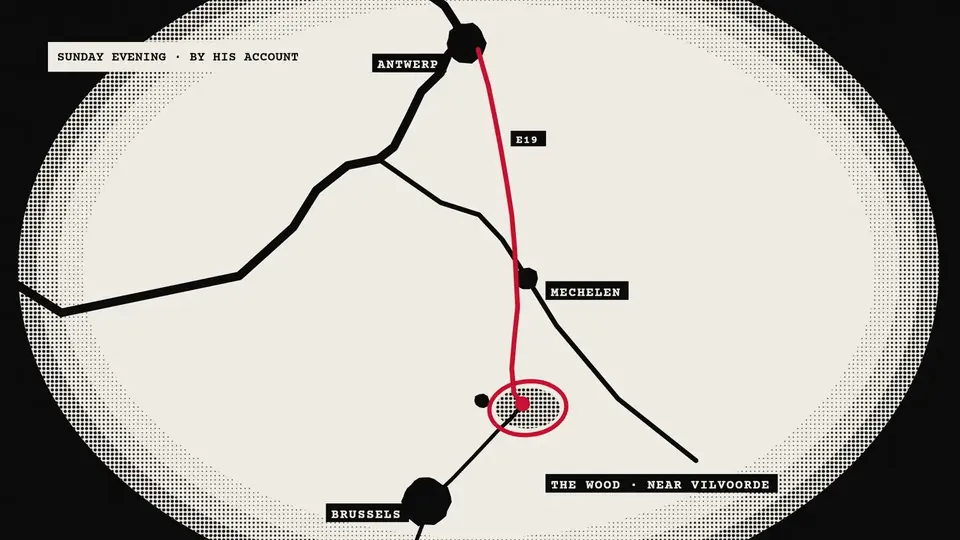
How the bag ended up there is one more of Notarbartolo's stories. He says that on the Sunday evening, about twenty minutes out of Antwerp on the E19, the friend he calls Speedy panicked and scattered it among the trees. He has never said who Speedy is.
Friday 21 February: the tenant comes back
Five days after the heist, Notarbartolo walked back into the Diamond Center. Staff recognised him and called the police. By his own account, and by the account in Flawless, he came back so as not to look like the only tenant who had vanished. He was arrested; the Associated Press, quoting the magistrate Leen Nuyts, reported that the arrests came over the weekend.
A friend who was with him ran off and was caught at Notarbartolo's Antwerp apartment, where the two men's wives were also arrested, the magistrate said. Bags and a rolled up carpet were seized there. In Italy, police searched his house near Turin and found diamonds in his safe that were used as evidence. Wired counted 17 polished diamonds with certificates; Corriere della Sera described a diamond still carrying its serial number; Notarbartolo says the stones were bought long before.
On 3 March 2003, Notarbartolo and his wife appeared before a magistrate and denied any connection to the robbery.
Who was convicted for the Antwerp diamond heist?
Four men. In May 2005 a Belgian court, the Antwerp Court of Appeal according to the Belga news agency, convicted Leonardo Notarbartolo as the head of the gang behind the break in and sentenced him to ten years in prison and a €1 million fine. Ferdinando Finotto, Elio D'Onorio and Pietro Tavano, tried in their absence, each got five years.
Each of the three was also fined €5,000, for having prepared or carried out the burglary, Belga reported, and their immediate arrest was ordered. Notarbartolo's wife and his friend, tried alongside them, were acquitted. According to the trade site IDEX, the four were also ordered to pay €4.5 million in damages to the victims who had joined the case.

The ruling of 19 May 2005 came on appeal. At the hearing on 3 March, the prosecutor had asked for ten years for Notarbartolo and five for each of the other three, and all six defendants denied the charges. Wired later wrote that Notarbartolo had been sentenced "based on circumstantial evidence".
- Notarbartolo rents an office in the Diamond Center, the prosecutor's office says.
- His last visit to the vault before the theft, investigators alleged.
- The vault is entered overnight.
- The break in is discovered; rubbish is found beside the E19.
- Notarbartolo walks back into the building and staff call the police.
- He and his wife deny any connection before a magistrate.
- At the appeal hearing, the prosecutor asks for ten years.
- Four men are convicted and two others acquitted.
- D'Onorio is in Belgium; Finotto and Tavano are arrested in Turin.
Dates from the 2003 press, Belga and IDEX reports, and Wired.
In November 2007, D'Onorio was handed over to Belgium, and Tavano and Finotto were arrested in Turin at the Antwerp prosecutor's request. Finotto avoided being sent to Belgium after his lawyer won an appeal, and served his sentence in Italy, according to Corriere della Sera. The 2005 judgment is not available online, and no earlier judgment has been found, so the court's reasoning is known only through press reports.
Wired, 2009: Notarbartolo's own story
In prison interviews published in 2009, as he was released on parole, Notarbartolo told his story to Joshua Davis of Wired. Davis met him seven times over 14 weeks in a prison in eastern Belgium, the last time on 4 January 2009, and the article went online on 12 March.
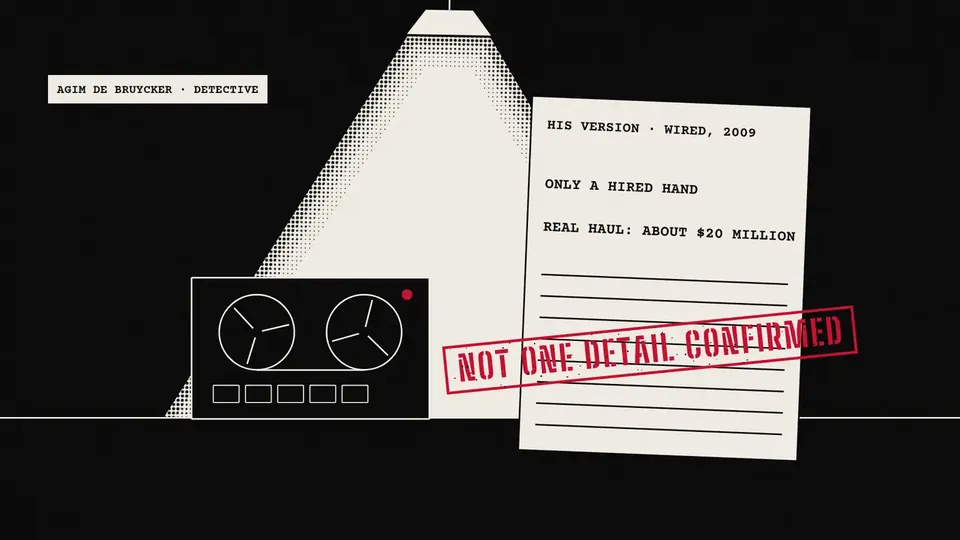
This is his account. He says that in the summer of 2001 a diamond dealer who bought stolen goods from him offered €100,000 to find out whether the vault could be robbed. He says the dealer built a full size replica of the vault in a warehouse outside Antwerp, where he met the crew, whom he names only by nicknames: the Genius, the Monster, the King of Keys and Speedy. He says many of the satchels they carried off turned out to be empty, that the take was "probably about $20 million", and that the heist may have been an insurance fraud by dealers who had emptied their boxes beforehand. And he says the crew waited in vain for the dealer on the Monday at a bar in Adro, in Italy, to share out the loot.
The same month, he told the Italian daily La Stampa something else again. "For Belgian justice I am guilty. Let's start from there," he said, calling it a constructed trial; he put the number of boxes at 123 and the take at "15, 16 million at most", and said no victim had lost a cent because insurers paid out. In the 2025 Netflix documentary he went further, and named the backer "Alessandro". Authorities interviewed for that film say they never found any evidence of a partner by that name.
Flawless, the detectives and the Wired dispute
One of the lead detectives, Agim De Bruycker, told the Columbia Journalism Review: "Not one detail of Leo's story can be confirmed by the facts in the investigation." Davis said he had not asked the police for their version, and the review gave Wired a "Dart" for coming "too close to qualified stenography".
The 2010 book Flawless: Inside the Largest Diamond Heist in History, by Scott Andrew Selby and Greg Campbell, gives a whole chapter to taking his account apart. On the replica vault, Selby asks why anyone would need a copy of a vault "that you already have total access to". The Globe and Mail's review of the book called the insurance theory one "for which not a shred of evidence exists", and many of the victims had no insurance at all. The authors also write that Notarbartolo would not talk to them unless they beat a six figure Hollywood offer, and that his Wired interview "satisfied his commercial needs". In March 2009 Paramount had bought the film rights to the Wired article; no film made from it has been found.
In August 2010 the Antwerp prosecutor said Notarbartolo meant to sell the rights to his story to Wired; his own lawyer answered, Belga reported, that "the story intended for Wired is a fiction". What the lawyer meant is unclear: it may have been the story itself, or only the claimed sale.
Were the diamonds ever found?
Only a small part of them. Some stones were recovered, from Notarbartolo's safe near Turin and from the rolled up carpet in Antwerp, and Wired reports marked $100 bills on the French Riviera. But most of the loot has never been recovered, and no total for what came back has been published.
At the Antwerp flat, Wired says, gems were vacuumed out of the carpet; a Belgian magazine mentions a single diamond in a vacuum cleaner bag. Where the rest went is unknown. Selby thinks it was most likely sold back into the trade long ago.
In mid July 2009, a few months after his release, police in Milan stopped Notarbartolo's car and seized about a kilogram of diamonds hidden in the back seats. His lawyer said they were cheap offcuts or industrial stones, bought legally, and that his client had not been arrested; Belgian police said experts found the stones to be of high quality. We found no report of any court linking them to the vault.
What we still do not know about the Antwerp heist
The method comes first. As set out above, no published finding explains how the thieves entered the building or opened the vault door, and the accounts of the combination and the key still compete.
Then there is the fifth man. Wired reported that the police knew of a fifth thief from phone records and DNA traces, yet he has never been identified. In Notarbartolo's own list of nicknames, the King of Keys, an older key forger by his account, has never been identified either.
Nobody knows the true value either. No inventory was ever published, and some of what sat in the boxes was never declared. Whether anyone stood behind Notarbartolo rests on his word alone. The court found him to be the leader; Selby says he does not think any outside partner commissioned him, although he sees Notarbartolo less as the brain than as the inside man who gathered the information.
The Wired story versus the record: myths and facts
Wired's 2009 story is the version most retellings follow. Here is how its best known claims, and a few press myths, compare with the record.
| The claim | What the record shows |
|---|---|
| A diamond dealer hired the crew | That is Notarbartolo's account. The court found him to be the leader, and authorities interviewed in 2025 found no evidence of his backer. |
| They rehearsed in a replica vault | His claim alone. Selby asks why a tenant who could already visit the vault would need a copy. |
| A hidden camera filmed the combination | Unproven. Selby says the digits can only be read through a lens on top of the dial. |
| They worked in the dark | According to Flawless, the lights were on when a guard found the vault. |
| An insurance fraud worth only $20 million | No evidence of a fraud has been published, and many box holders had no insurance at all. |
| A salami sandwich caught them | The receipt for the salami led to Finotto. Notarbartolo was traced through a document bearing his name and his own return to the building. |
| It happened on Valentine's night | The vault was entered on the night of 15 to 16 February, the weekend after Valentine's Day. |
After the sentences: from Hasselt to Netflix
Notarbartolo was released on parole from Hasselt prison in early 2009, after about six years counting the time he was held before trial, and went straight to Italy. In August 2010 the Antwerp prosecutor asked for his parole to be revoked, saying he had not given his new address in Italy and had paid nothing in damages. In 2013, according to the Belga news agency, he was arrested at Paris Charles de Gaulle airport and sent back to a Belgian prison for breaking the conditions of his parole, which included starting to compensate the victims.
In April 2016, Italian police put him under house arrest in a separate investigation, accused with four other men of two thefts from jewellery sales representatives; this article reports no outcome of that case. In 2025 he appeared on camera in the Netflix documentary Stolen: Heist of the Century, where he said: "We felt proud of doing something so strong and powerful."
Ferdinando Finotto died of an illness in July 2022, aged 63, according to Corriere della Sera. We found no public word on Elio D'Onorio or Pietro Tavano since Wired reported in 2009 that they were serving their sentences.
On a Monday morning in 2003, the dealers of Antwerp found their vault open without a sound. The rubbish in the woods helped investigators find the men who were convicted; it never explained how the door was opened. For another vault raid that ended in court, read our account of the Hatton Garden heist, and watch the Antwerp film on our YouTube channel.
Questions about the case
How much would the Antwerp haul be worth today?
If the police estimate of $100 million is right, about $184 million in October 2026 dollars, according to the consumer price index of the U.S. Bureau of Labor Statistics. The conversion inherits the estimate's uncertainty: the true value of what sat in the boxes was never published.
What else was in the boxes besides diamonds?
Gold, jewellery, cash, securities, and the certificates that prove where stones come from, according to reports at the time. The authors of Flawless list at least 100,000 carats of diamonds, 33 pounds of gold, at least $1.5 million in cash and more than two dozen luxury watches.
How long were the thieves inside the vault?
No official timing has been published. By Notarbartolo's account in Wired, they went in a little past midnight and stopped at about half past five on the Sunday morning. The Ringer, drawing on Flawless, has them starting around midnight and leaving around dawn.
What is the School of Turin?
A label for a loose network of professional thieves from the Turin area, each with a speciality. According to Flawless, as relayed by The Ringer, a newspaper reporter coined it in the late 1990s, and it never had a real structure.
Has the Antwerp heist been made into a film?
The Italian drama series Everybody Loves Diamonds (2023) is freely inspired by it, and the action film Den of Thieves 2: Pantera (2025) borrows its techniques. Closer to the record is the 2025 Netflix documentary Stolen: Heist of the Century, based on Flawless.
How we researched this
Our team built this case from a research file checked line by line against its sources: press and agency reports from 2003 to 2005, the Wired story, reviews of Flawless and what the detectives said on the record. Claims rest with whoever made them. The voice in our film is synthetic.
Sources
- Andrew Osborn, "Perfect crime loses its sparkle as bin bag yields vital clues", The Guardian, 1 March 2003.
- "Antwerp counts cost of gem heist", BBC News, 20 February 2003.
- Associated Press: "Four arrested in diamond heist", 25 February 2003; Raf Casert, "4 held in 'incredible' diamond heist", Seattle Times, 4 March 2003; "No trace of loot yet found in massive diamond heist", 5 March 2003.
- Edahn Golan, "Antwerp Diamond Exchange Break In", IDEX Online, 17 February 2003; "Court Convicts Four in Antwerp Diamond Center Theft", IDEX Online, 22 May 2005.
- "Stolen Antwerp Diamonds Still Missing", ABC News Primetime, 12 February 2004.
- Belga reports: La DH, 29 March 2003; La Libre Belgique, "Diamond Center: 10 ans requis", 4 March 2005; La DH, 20 May 2005; RTBF, 17 March 2009; RTBF, 18 August 2010; L'Avenir, 18 February 2013.
- "La bande du casse du siècle est en prison", La DH, 28 November 2007.
- Joshua Davis, "The Untold Story of the World's Biggest Diamond Heist", Wired, 12 March 2009.
- Interview with Leonardo Notarbartolo, La Stampa, 21 March 2009.
- "Par sets Diamond with J.J. Abrams", The Hollywood Reporter, 16 March 2009.
- "Notorious Antwerp Heist Thief Caught With Rough Goods", IDEX Online, July 2009.
- David Hayes, review of Flawless, The Globe and Mail, 16 April 2010.
- Alexandra Fenwick, "Darts and Laurels: The diamond thief's tale sounded too good to be true", Columbia Journalism Review, July and August 2010.
- Scott Andrew Selby and Greg Campbell, Flawless: Inside the Largest Diamond Heist in History, Union Square Press, 2010 (through reviews and interviews).
- ANSA, 13 April 2016; La Guida, 13 April 2016.
- Corriere della Sera, Turin edition, 2 September 2022.
- Interview with Scott Andrew Selby, La Libre Belgique, 12 October 2023.
- "The Heist From Den of Thieves 2: Pantera Actually Happened", The Ringer, 14 January 2025.
- "The Mastermind of the World's Biggest Diamond Heist Speaks Out in Netflix Documentary Stolen", TIME, 8 August 2025.
- BBC News Mundo, interview with Patrick Peys, 13 December 2025.
- U.S. Bureau of Labor Statistics, consumer price index (CPI U), read 18 November 2026.